I want candy
Quote of the day:
When I grow up I want to be a candy shop worker. I mean, after I win the Olympics. When I have to get a real job, I’ll work in a candy factory. Like those guys…
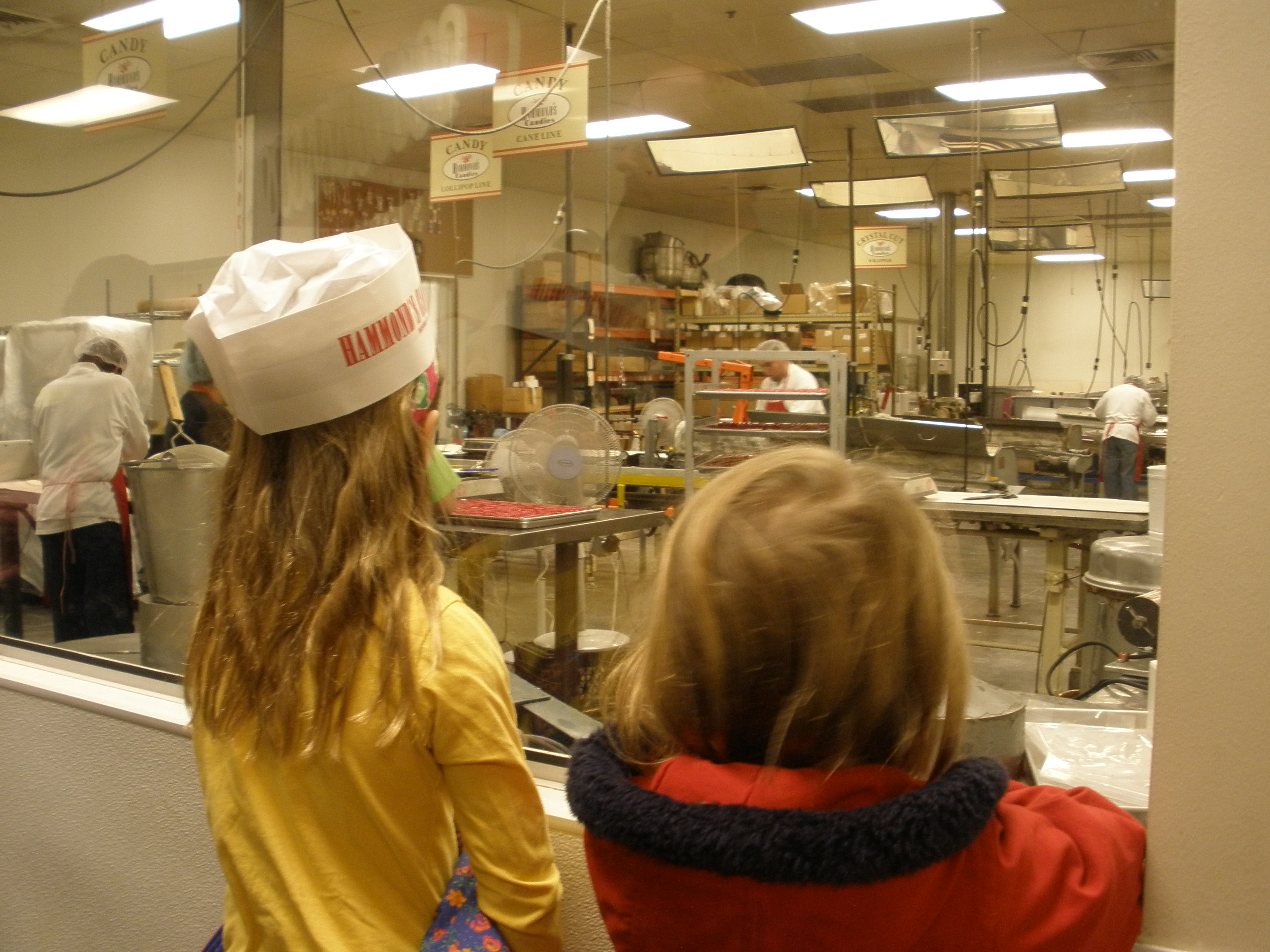
That’s Kira, watching her new heroes at work. After seriously considering a future in aeronautics or marine biology she has at long last settled on a lifelong career in the teeth-rotting arts.
Yes, I suppose I am to blame. En route to the aquarium I surprised the girls with an unscheduled stop at Hammond’s Candies. Yup, a spontaneous, never-saw-it-coming, end-of-winter-break, tour of a candy factory. That’s just the wild and crazy kind of mama that I am.
It was pretty old school around there. Reruns of the classic clip from I Love Lucy would have been playing in your head too as you watched these guys kneading the cane sugar and folding it into candy. I never caught a glimpse of Lucy desperately stuffing chocolates into her mouth, but she would have fit right in with all the retro candy boxes and machines from the 1920s.
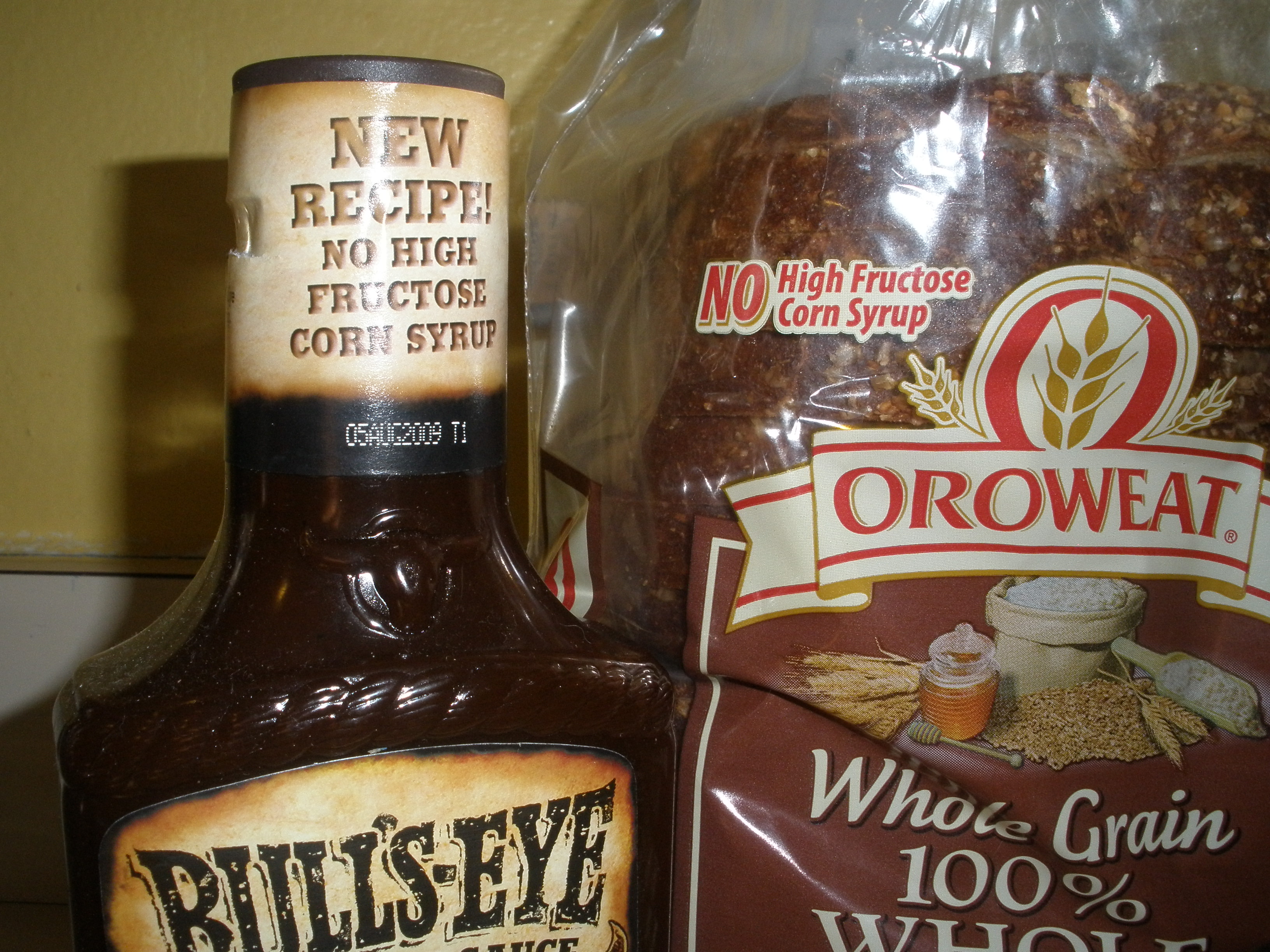
It wasn’t in black and white, but they still make candy the old fashioned way: sugar, water, and corn syrup. Oh man, really? How old fashioned is corn syrup? Can I at least call ye olde corn syrup ok and continue to condemn the high fructose corn syrup that lurks in our bread and ketchups?
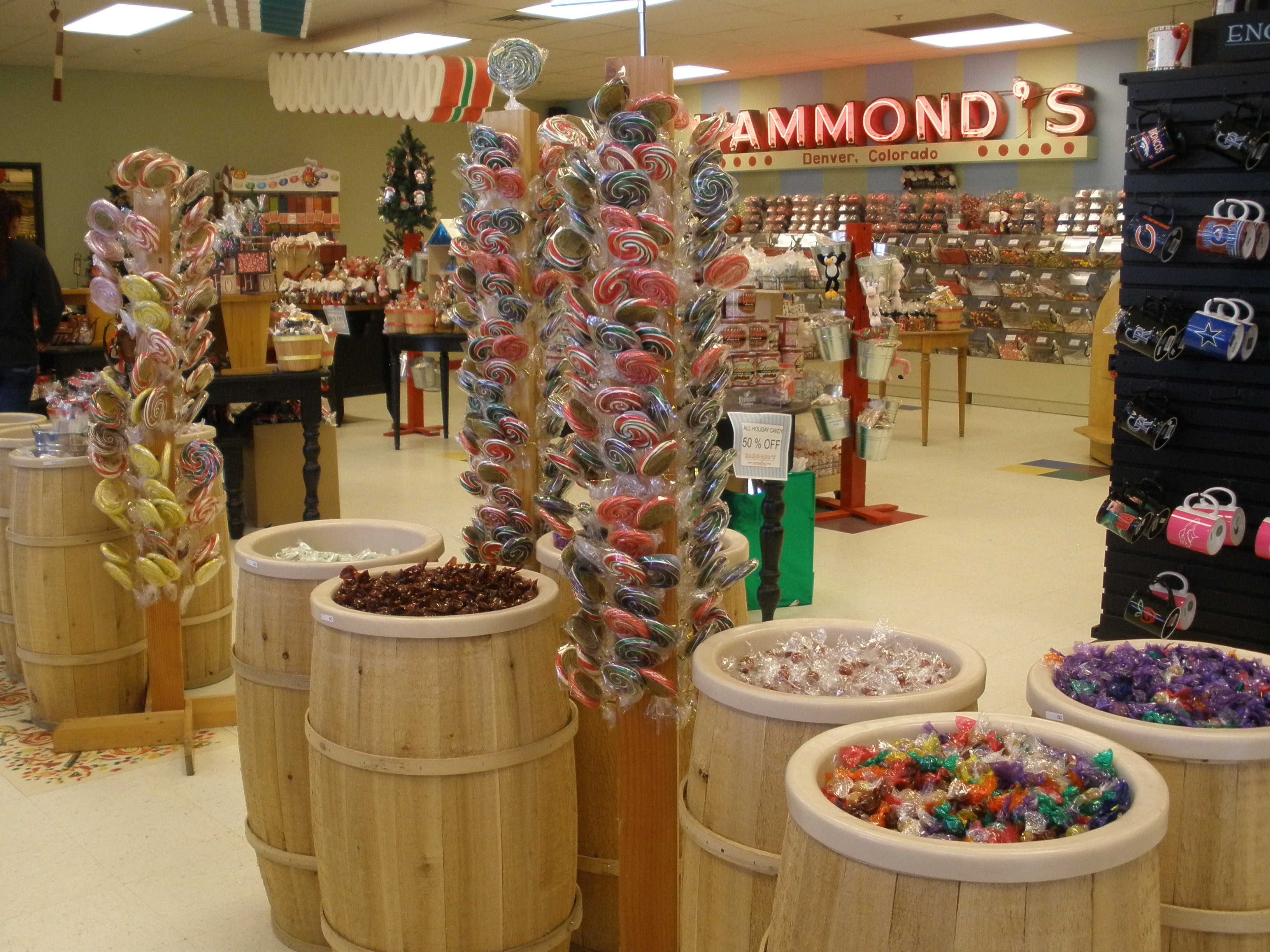
Seriously, can sweets that look this quaint threaten our well-being as much as the well-documented evils of a bag of skittles?
I spent some precious, sugar-crash-induced nap-time trying to find out. Here’s what I learned. There are many sites that discuss the chemical composition of high fructose corn syrup (hfcs) in scientific terms. They all sounded serious, complex, and well, science-y. None of them mentioned plain old corn syrup, but they discussed hfcs in terms that were sufficient to keep it black-listed from my grocery list. Still, I wanted to know the difference. I persevered. I called Hammond’s.
According to the lady who answered the phone and went to ask someone, Hammond’s uses corn syrup, (but never the high fructose stuff;) specifically they use 42 DE corn syrup, which is all natural and has a lower dextrose equivalent. In contrast, hfcs is highly refined through chemical processing and has an increased level of (fake) sweetener added.
Complicated stuff, but here’s the gist, based on what I learned from the call and from what Michael Pollan, the food guru and author of In Defense of Food and Omnivores Dilemma (both are on my must-read list,) has said:
We should eat food that is closest to being food. The more refined it is, the more processed it is, the worse it becomes for our bodies. As Pollan put it, if our grandmothers would not recognize something as food, then we should give serious pause before putting it in our mouths.
That’s food for thought. For me, it means that I will continue to eat my sweets in this form–

And heed the warnings that advise me when it is hiding this form–