It’s a bird, it’s a plane, it’s…Super-Flax!

You should add flax to everything.

Not convinced? Oh, alright.  If you don’t want to save time and just take my word for it, here are some of the reasons why I think flax is great:

  1. It adds moisture to things like cakes, muffins, and quick breads. You can decrease the oil in recipes by substitute ground flax;
  2. It adds a great nutty flavor to things;
  3. A subtly, great nutty flavor that picky children don’t detect;
  4. It’s easy to hide–sprinkle ground flax seeds on everything from yogurt to ice cream, in granola or on peanut butter sandwiches;

And there’s a load of health benefits too:

  1. It’s high in omega 3 fatty acids, which have been found to benefit everything from the heart to lowering cholesterol to increasing brain power.  All good things.
  2. High in lignans, antioxidants associated with a reduced risk of cancer, including prostrate and breast cancer.
  3. It’s been found to lower bad cholesterol and blood pressure;
  4. It’s high in fiber;
  5. It’s been shown to be helpful in reducing incidences related to Chron’s disease;
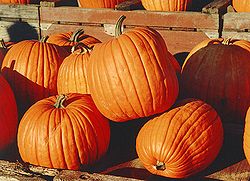
Let them eat pumpkin

I’m first in line behind the old rallying call of Let Them Eat Cake. So trust me when I say that adding pumpkin to your cakes, your muffins, your breads, is the way to go. Open up, and embrace all things pumpkin. Why? Well, it’s a great low-fat substitute for oil, plus it makes things taste great. But there are loads of other good reasons. I’ve scanned the web and gathered a few for you here.

Health & Nutrition Benefits of Eating Pumpkin
  • Pumpkin is rich in carotenoids, good for keeping the immune system strong.
  • Beta-carotene, found in pumpkin, is a powerful antioxidant as well as an anti-inflammatory agent. It helps prevent build up of cholesterol on the arterial walls, thus reducing chances of strokes.
  • Being rich in alpha-carotene, pumpkin is believed to slow the process of aging and also prevent cataract formation.
  • Pumpkins have been known to reduce the risk of macular degeneration, a serious eye problem than usually results in blindness.
  • The high amount of fiber, present in a pumpkin, is good for the bowel health of an individual.
  • Being loaded with potassium, pumpkin is associated with lowering the risk of hypertension.
  • The presence of zinc in pumpkins boosts the immune system and also improves the bone density.

The Native Americans were aware of all the benefits in pumpkin. Here’s a handful of random fact, borrowed from HUBpages.

  • Yuma tribes created an emulsion from pumpkin seeds and watermelon to help heal wounds. The seed oil was also used to treat burns and wounds.
  • Catawabas ate pumpkin seeds either fresh or dry as a medicine for kidney support.
  • Menominees mixed powdered squash and water to for urinary support.
  • Modern folk healers believe the pumpkin to be beneficial in ridding the body of intestinal worms and also believe the ground stem of the pumpkin brewed into a tea may help ease women during their menstrual cycle.

Rhubarb, when do I pick it and what do I do with it?

Got Rhubarb? Lucky you. Rhubarb is used in Chinese medicine and is thought by some to have cancer-inhibiting qualities. Plus, it’s super tasty in desserts..

Rhubarb stalks are ready to harvest from early spring through mid summer as soon as the leaves are full. The stalks will be anywhere from light green to bright red in color, and should be thick enough so they don’t bend like rubber.

To harvest, grasp the stalk by the bottom and wiggle it, just a little bit.  Wiggle a lot if you want to count it for today’s workout.

Do not eat the leaves, they are toxic. So toxic, in fact, that if I touch them without gloves I get a weird skin  tightening sensation, though it doesn’t bother the kids at all. They are tough as nails.

I rinse, dry then dice the stalks right away and then lay them out on a tray in the freezer. Once frozen, I dump them all into a ziploc where they will be ready to add (frozen is fine!) to any tasty recipe (like this one for my locally famous Rhubarb Crisp).

Compost Heap! I got a Compost Heap!

Happy Mother’s Day to me! We had been discussing it for a while, (because, whenever there is something to be done there is nothing like good old fashioned conversation to nip it in the bud,) but finally, it happened. My guy, that nutty romantic, built me a compost heap.

In case you’re thinking, what? Why on earth would anyone want a compost heap? Here’s a brief list of the finer points:

  1. It’s good for the earth
  2. It does not smell at all.
  3. Backyard wildlife (we’ve got bunnies, squirrels, birds, toads, etc) are not interested in it.
  4. Oh, the complements you will get. Like this one that had me blushing all green red in the face.

It’s our compost heap, and it’s 100% homemade. Dave followed directions he found on ecocycle, which says that as long as it’s about 3’X3′ and has some open space to allow for air circulation, we’re good to go. Ours is built from old fence posts, leftover deck lumber and some mesh netting from last year’s strawberry patch. Ecocycle has a comprehensive list of what is and is not compostable, but here’s the gist:

Ok to Compost:

  • All vegetable waste (although apparently worms aren’t onion lovers)
  • All garden waste
  • Tea in its bag and coffee in its filter (I figure the caffeine makes the worms go faster, and that’s got to be a good thing)
  • Dryer lint

Not Ok to Compost

  • Proteins (ie, any meat or cheese)
  • Eggs (shells are ok if they are broken up well)
  • Oil

We send the girls out with a little tupperware for the compost heap each evening as one of their allowance-worthy chores. They dump it, and then cover the kitchen waste with a handful of leaves or cut grass. They’re still too small to manage the pitchfork, so every few days farmer Dave heads out to turn the pile. We also water it to keep it slightly damp, which helps the stuff cook down into yummy soil.